
Kimchi
Traditional kimchi. South Korea’s national dish, which goes well with just about everything but is especially good with rice dishes. The longer you let your kimchi ferment, the more distinct the sour flavor becomes.
About 1 hour
Vegetarian

Ingredients
- 1 head of Chinese cabbage (about 1.5 kg)
- 0.25 dl salt, preferably sea salt
- 1 liter of water
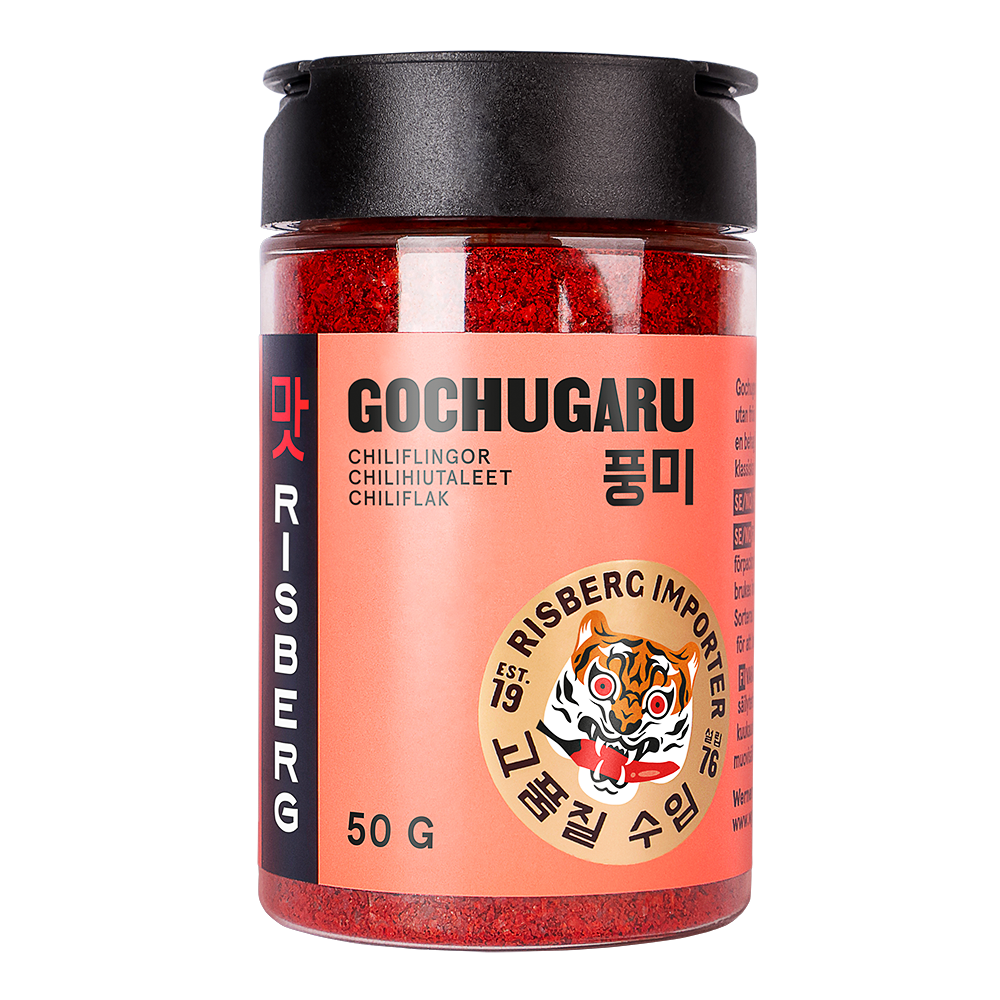
- 2 dl gochugaru
- 3 tbsp fish sauce
- 2 tbsp crushed ginger
- 4 garlic cloves
- 1 tbsp sugar
- 1 tbsp dark-roasted sesame oil
- 3 scallions
- 1 carrot
- 5 cm radish
- 1 st kinakål (cirka 1,5 kg)
- 0,25 dl salt, gärna havssalt
- 1 liter vatten
- 2 dl gochugaru
- 3 msk fisksås
- 2 msk ingefära krossad
- 4 st vitlöksklyftor
- 1 msk socker
- 1 msk sesamolja mörkrostad
- 3 st salladslökar
- 1 st morot
- 5 cm rättika
Instructions
Cooking Mode
- Cut the Chinese cabbage lengthwise into four wedges.
- Dissolve the salt in the water and mix it with the Chinese cabbage in a large bowl. Make sure the cabbage is thoroughly covered. Let it sit for 2–4 hours, turning the cabbage occasionally.
- Remove the cabbage from the brine and rinse it thoroughly in cold water 2–3 times to remove excess salt. Let it drain in a colander.
- In a separate bowl, combine the chili flakes, fish sauce, grated ginger, minced garlic, sugar, and sesame oil to make a chili mixture.
- Slice the green onions into thin slices, and julienne the carrot and radish. Stir the vegetables into the chili mixture.
- Massage the cabbage with the chili mixture, making sure to work the mixture in between the cabbage leaves as well.
- Pack the cabbage tightly into a thoroughly cleaned glass jar, plastic container, or kimchi jar. Choose a container size appropriate for the amount of kimchi, and try to avoid leaving too much air in the container. Leave a little space at the top, as the cabbage will expand during fermentation.
- Press down on the cabbage to remove any air pockets.
- Let the kimchi sit at room temperature for 2–5 days, depending on how sour you want it to be. Check the kimchi regularly. Once fermentation has begun, you’ll see small bubbles in the jar.
- Taste it and place the kimchi in the refrigerator once it is sufficiently tangy and fermentation has begun. Let it sit for at least a week so the flavors can develop.





This modal contains dynamic content generated by "JavaScript \ Modal Logic"